For this edition, physical risks emerged as the clear theme. The climate events of recent months have understandably renewed investor attention on this type of risk, even though its financial materiality has been closely scrutinised by many asset managers for several years already, particularly in the United States. This summer, wildfires in Europe caused between €15 and €20 billion in losses, a year after the California wildfires, whose cost was estimated at between $76 and $131 billion. The sustainability data market has taken note of this shift: MSCI's acquisition of First Street and ISS's acquisition of Sust Global, two specialists in physical risk data, are recent illustrations of this trend. Against this backdrop, the availability and quality of information sources on physical risks have become a topic in their own right for ESG teams.
WeeFin's participation in this event continues a long-standing collaboration with the FIR. The two organisations had already joined forces in 2025 to publish the Sustainability Data Public Sources Mapping, a catalogue of nearly 80 sources covering various sustainability topics, which has since been downloaded more than 800 times and is regularly updated.
Building on that work, the FIR and WeeFin chose to produce a new mapping, this time dedicated to public sources on physical risks along with a handful of additional sources on biodiversity. Led by WeeFin's Expertise team, this mapping catalogues more than 30 sources from around thirty organisations, documenting for each one its methodology, geographic and thematic coverage, the indicators it offers, how it can be accessed, and how often it is updated. It does not replace the 2025 Mapping, whose scope remains broader, but rather deepens it on a topic whose importance current events have made clear.
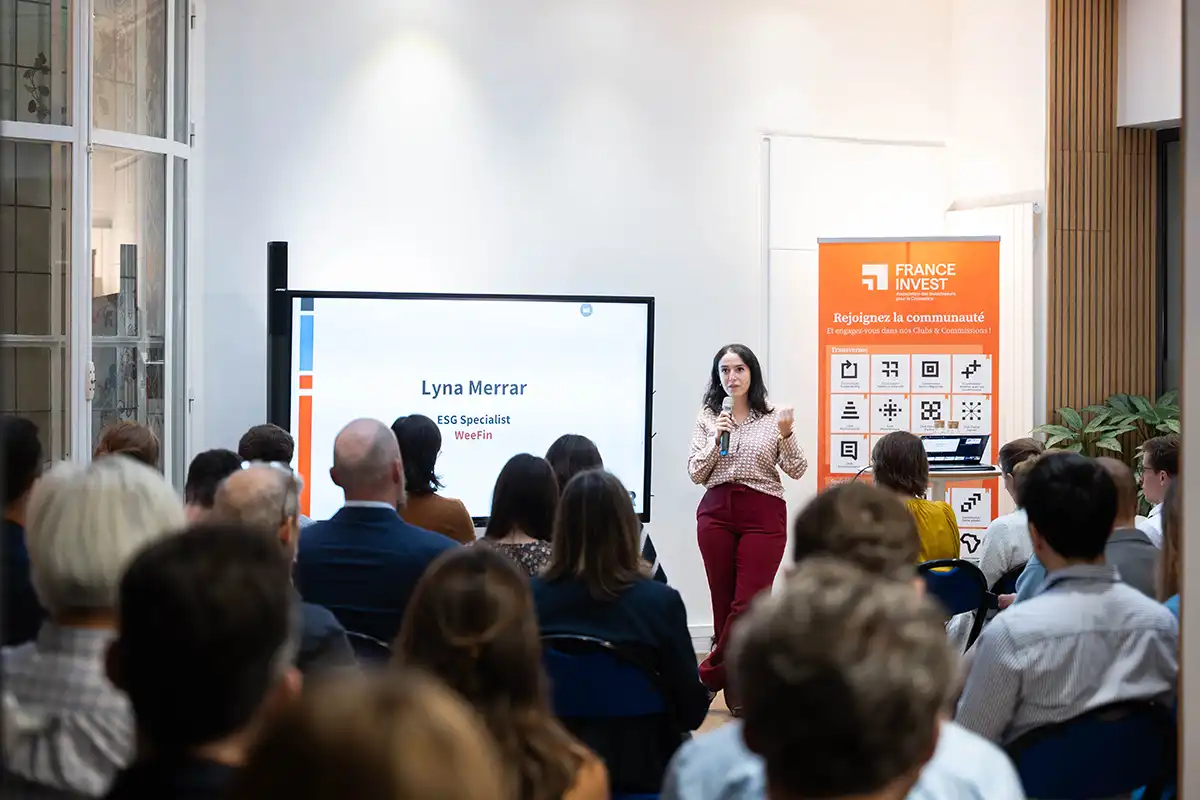
The 18 September event opened with the presentation of this new mapping by Lyna Merrar, sustainability expert at WeeFin. Beyond the general methodology, the session offered a concrete illustration of how it can be used: two sources were given a dedicated “pitch.” Guillaume Wahl, sustainability expert at WWF, presented the Risk Filter Suite, a tool for assessing physical, regulatory and reputational risks related to biodiversity and water. Christophe Christiaen, director of the Spatial Finance Initiative at the University of Oxford, detailed the GeoAsset Project, an open database dedicated to geolocating assets and assessing their exposure to risk. Both speakers walked through how their respective tools were built and took questions from the audience, giving the presentation a more operational dimension than a simple project readout.
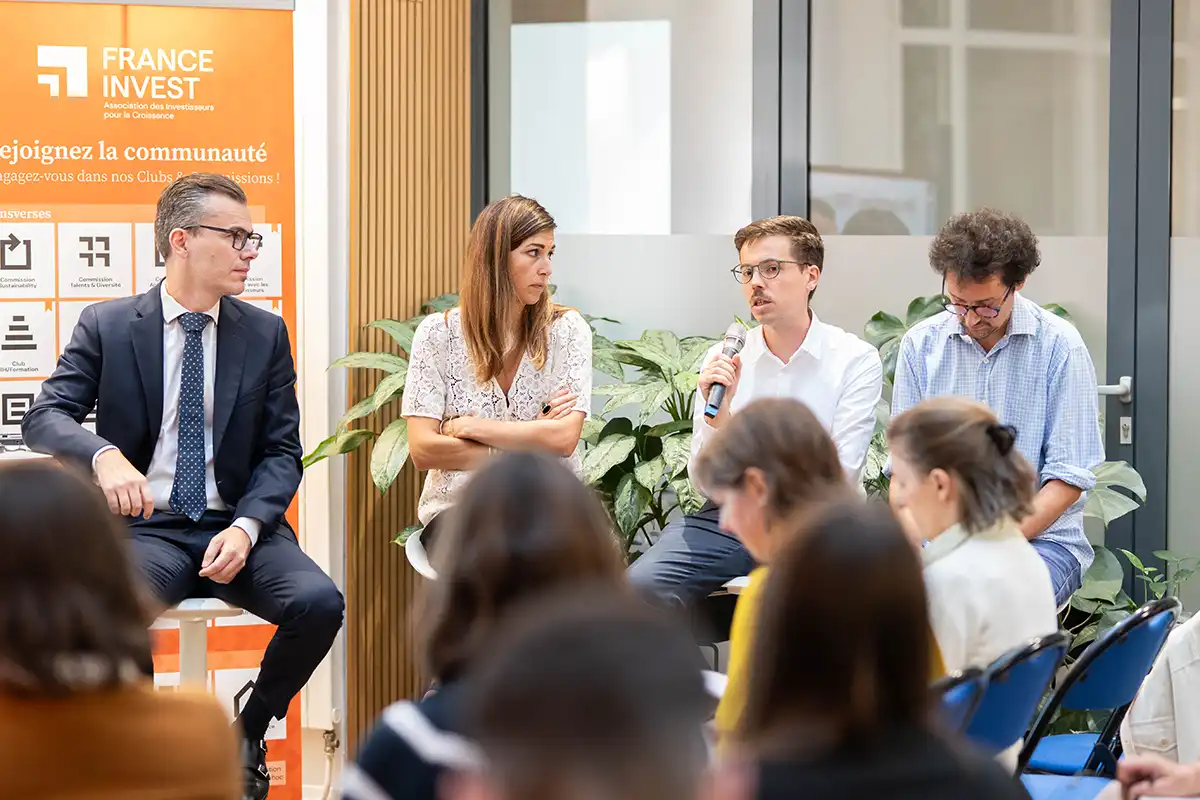
The second part of the event took the form of a panel discussion on integrating public sources into financial institutions' sustainable investment and risk management strategies. Panellists included Christophe Christiaen and Guillaume Wahl, who had already presented their respective tools, alongside Pauline Lejay, Head of Sustainable Finance at Groupama Assurances Mutuelles, and Simon Mauffray, quantitative analyst at OFI Invest AM. Discussions focused in particular on the conditions under which these sources can find their place alongside the data already used by sustainability teams, the difficulties sometimes encountered in getting to grips with the underlying models, and the areas for improvement identified by the panellists.
The discussion's overall conclusion was that public sources do not replace the data provided by the specialised vendors financial institutions are already used to working with. They do, however, offer a useful complement. This reading echoes the one that had already guided the construction of the 2025 Panorama: public sources and data vendors meet different needs and are best used together.
This point was echoed in closing by Lise Moret, Head of Sustainable Finance and Impact Investing at Banque Hottinguer and Chair of the FIR's research committee. She stressed this complementarity, noting that it reflects the approach taken by WeeFin and its users.